

INTEGRATIVE DESGIN PROCESS
Matthew Salenger was interviewed regarding the Integrative Design Process ; video by Beth Cochran of Piper
Integrative Design Process (IDP)
An Integrative Design Process is a structured way to get owners, designers, engineers, builders, financiers, and operations staff in the same room early—so decisions work together instead of conflicting later. The benefits are practical:
fewer surprises and change orders
lower operating costs over the life of the building
better comfort and health for occupants
durable, easier-to-maintain buildings
stronger environmental performance and beauty
Example: a smart shading and daylight strategy can improve comfort, reduce cooling loads, protect materials, and shape the architecture—all at once.
A whole-building approach to environmental stewardship:
IDP helps teams make coordinated choices that reduce energy and water use while improving comfort, durability, and long-term operations.
If you want to go deeper: Bill Reed and 7group’s work on integrative design and whole-systems thinking is a useful reference for how IDP supports high-performance, sustainability-focused projects.
Where this approach comes from:
IDP emerged in the mid-2000s as a way to coordinate disciplines to achieve higher-performance outcomes—often in support of programs such as LEED and the Living Building Challenge. Regenerative practitioners later expanded the approach to include a wider set of stakeholders and a broader definition of success: not only efficiency, but also long-term operational realities and positive impacts on people and place.
coLAB studio has used this expanded form of IDP since 2014 and has learned directly from leaders in the field, strengthening our ability to guide teams toward clear priorities and better outcomes.
What happens in an IDP:
Workshops early in the process to bring people into the process
Align on goals (budget, comfort, energy, maintenance, schedule, etc)
Test big-leverage strategies early (site planning, solar shading, landscapes, etc)
Agree on “rules of the road” and track decisions through design + construction
Carry those targets through design and construction
For complex projects, we’ve found this method the most reliable way to reduce downstream conflict and improve performance.
Below are project examples of our work facilitating Integrative Design Processes for various clients.
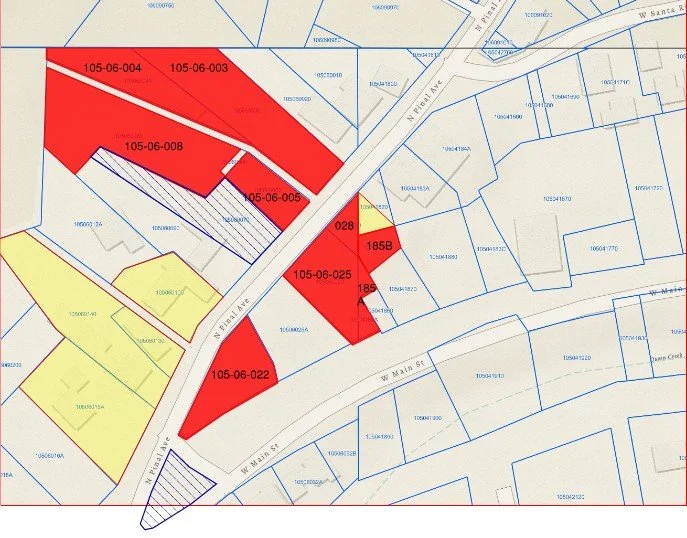
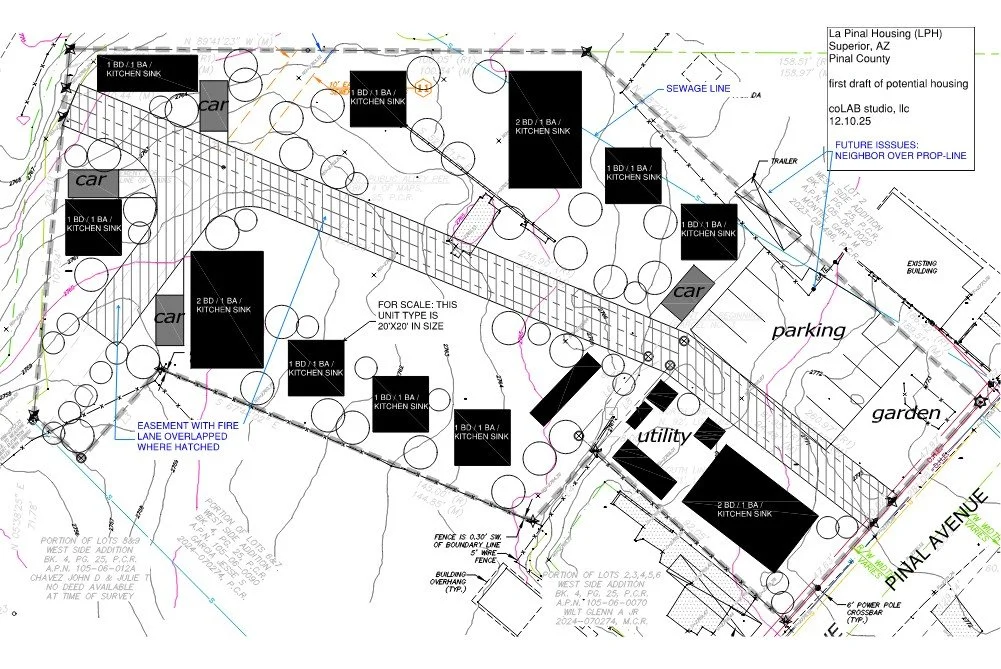
La Pinal Community Housing & Commercial Center Superior, AZ
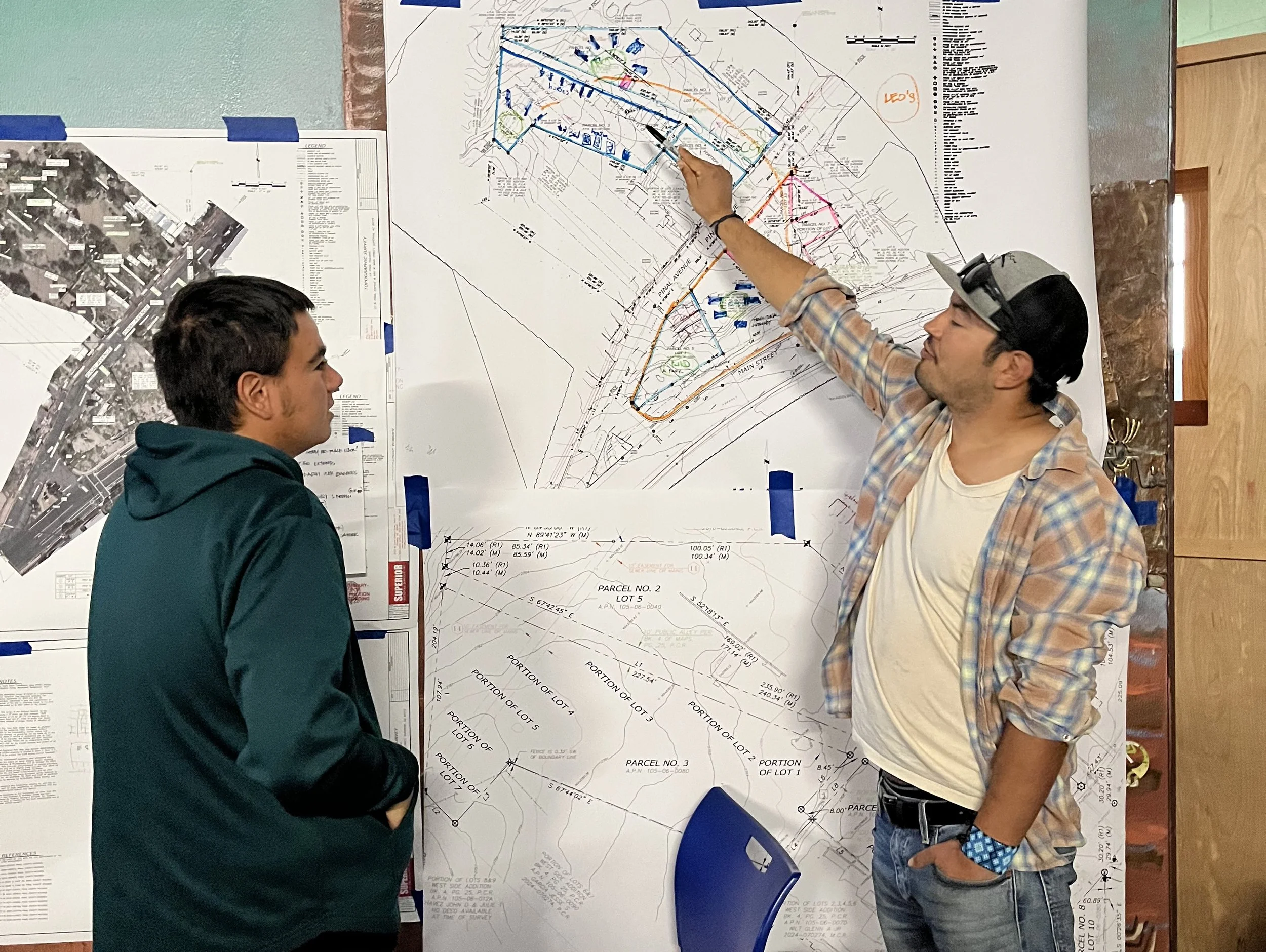
A non-profit owner in Superior requested design assistance of coLAB studio to assist in reconstituting an area back to its past glory days where community is united and helping each other. We conducted four IDP workshops to ascertain priorities and gain alignment from the diverse community.
The above video was produced by the owner of this project, Regenerating Sonora.
Desert Botanical Garden Hazel Hare Center for Plant Science
Matthew Salenger (coLAB studio) programmed and facilitated all IDP workshops - with help from design + construction partners 180 Degrees, Trueform Studio, and Jeff Frost of Brightworks.
This photograph is from the first workshop, where we dug deeply into the roots and needs of the project- and also the hopes, dreams, aspirations, and potential for outcomes to create positive evolution at the Desert Botanical Garden over the next 20 years and beyond.
To-date, the work we produced in 2014 is still being followed. That means the IDP process worked completely for the entire campus.
This is a primer for what an IDP entails:
Facilitating group design
Rather than an architect and/or engineers designing a building project in isolation, the IDP involves direct participation with the client and any other stakeholders deemed important to the process.
As the architect for this project, it was refreshing and inspiring to have all IDP participants co-creating the conceptual site plan and buildings together with the designers and engineers.
Inclusionary group work
To find the best solutions, we break into groups that each contain a diverse set of experts/owners/designers/etc, to work on a ‘problem.’ Then, each group presents their discoveries and solutions for full-workshop discussion. In this case we had five different groups working, who learned from each group’s best ideas. We then focused in on the best possible design with everyone’s consent.
General to Specific
Each workshop gets progressively more detailed. We start with general alignment of goals, move to site design, then building design, phasing, etc.
In this case we began to look at building design.
Careful Listening
Through the workshops, everyone learns to respect one another- to consider ‘crazy’ ideas, and ultimately agree on a direction.
Working it out
Dynamic design sometimes take focused corrections. And, ultimately, the designers and engineers work out details.
The engineers found the process very helpful. Though the initial meetings/workshops seemed cumbersome, it sped up the design process in the end. Most IDP’s save between 10-20% of total time from start to permitting because of the early involvement by the design team.
The end result
Once construction was complete, and we waited a year to hear the results, the Desert Botanical Garden told us their plants and staff were thriving like never before.
The first phase of construction was completed in 2017. The second phase will be completed in 2025, and Phase three in 2027. The IDP process has been the backbone for all decisions made through all design, construction, and phases.


A Montessori School Expansion
Matthew Salenger, Maria Salenger, and Sonja Bochart programmed and facilitated all IDP workshops
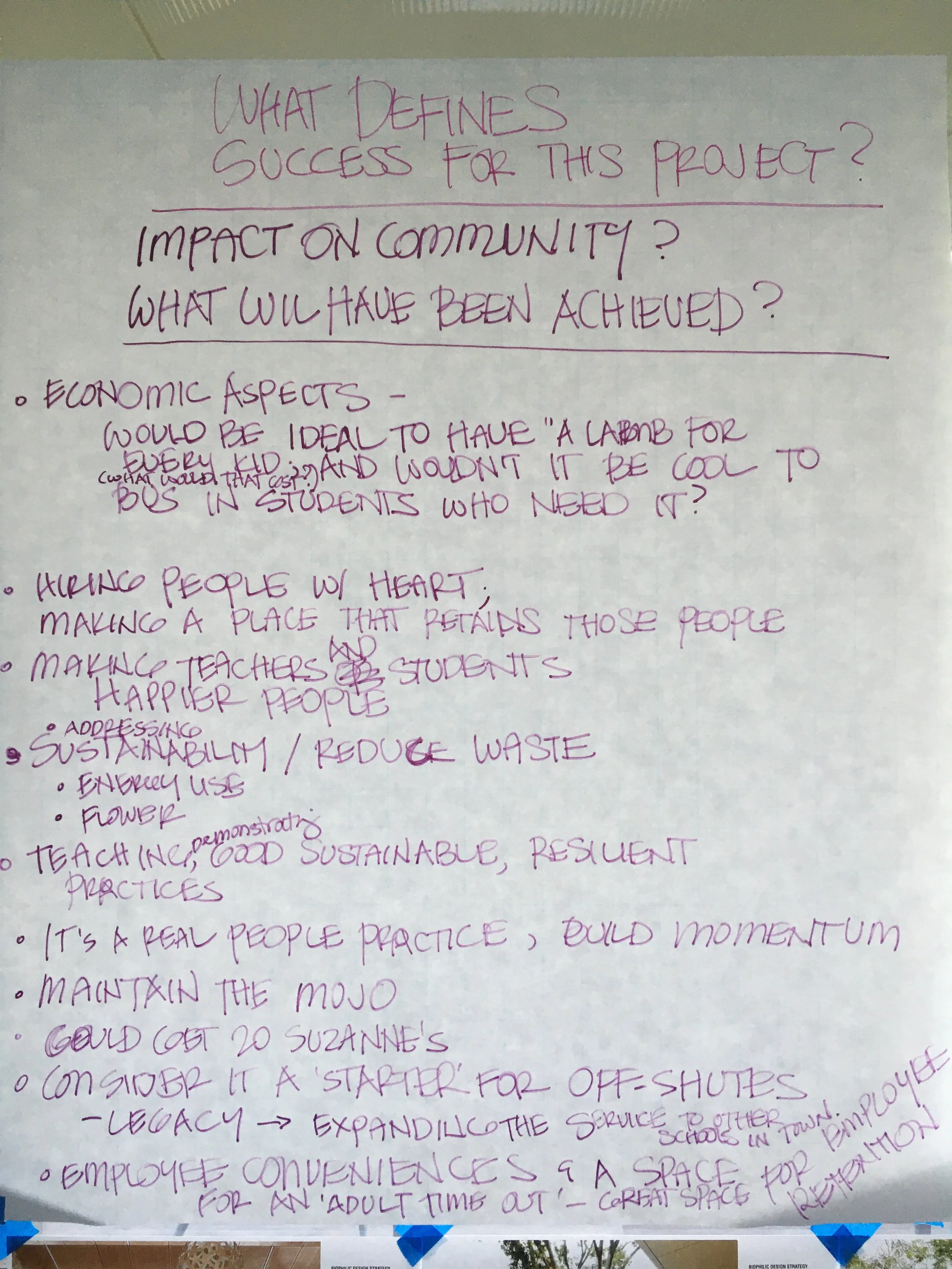
This photograph is from the first workshop, where we dug deeply into the roots and needs of the project- but also the hopes, dreams, aspirations, and the potential for the outcomes to create positive evolution over the school’s next 20 years.
There were only 10 people in this IDP group in order to discover how complex the project would be. As it turned out, we were able to find the right design fairly quickly.
Recording the discussions
The first workshop utilizes exercises for discussions to bring out a wide range of information from the IDP group, which forms the basis for design- but also for the relationships we create between everyone participating.
Subtle work
With all the available information, it is important to keep everything visible, accessible, and relevant for further discussion.
All information is quickly reviewed at the start of each workshop to make sure the project is still on-track.
The final design was appreciated by all involved.


Step-1 House (a design for CIRS patients)
Even smaller projects benefit from IDP
Matthew Salenger of coLAB studio was approached by a couple to facilitate a unique IDP for a house, and potentially many homes.
Because of a genetic health issue, the couple and their children require a special home that does not allow water infiltration to produce interior mold. The family sought to create a case-study of a house designed for patients like them, which could be replicated, and possibly expanded into multi-family housing developments.
The IDP allowed everyone participating to understand all the special needs of the couple, while the couple learned a tremendous amount about the building industry, specialized building materials and equipment, from the experts the couple and coLAB studio brought in.
The IDP group sets priorities and orders the content to help guide the entire IDP process as well as the design and construction of the project.
Through careful conversations, the client and coLAB studio produced frameworks to “test” various building enclosures’ ability to meet the needs of anyone wanting to build a home.
Experts really matter
The experts in health, building remediation, design, and building science allowed our IDP to educate the group and speed up the process for finding the right enclosure to utilize for the house’s design.
Part of our facilitation involves organizing all the IDP participants, setting up the workshops, disseminating information, and keeping the workshops productive.
This is an example of an “IDP Roadmap,” which shows dates and needed participation for workshops. What is shown is partial, as the IDP ultimately should extend through all design, construction, and post-occupancy testing. The workshops end before construction, but occasional site-tours and/or meetings may continue to occur as-needed through post-occupancy as desired by the client.


